
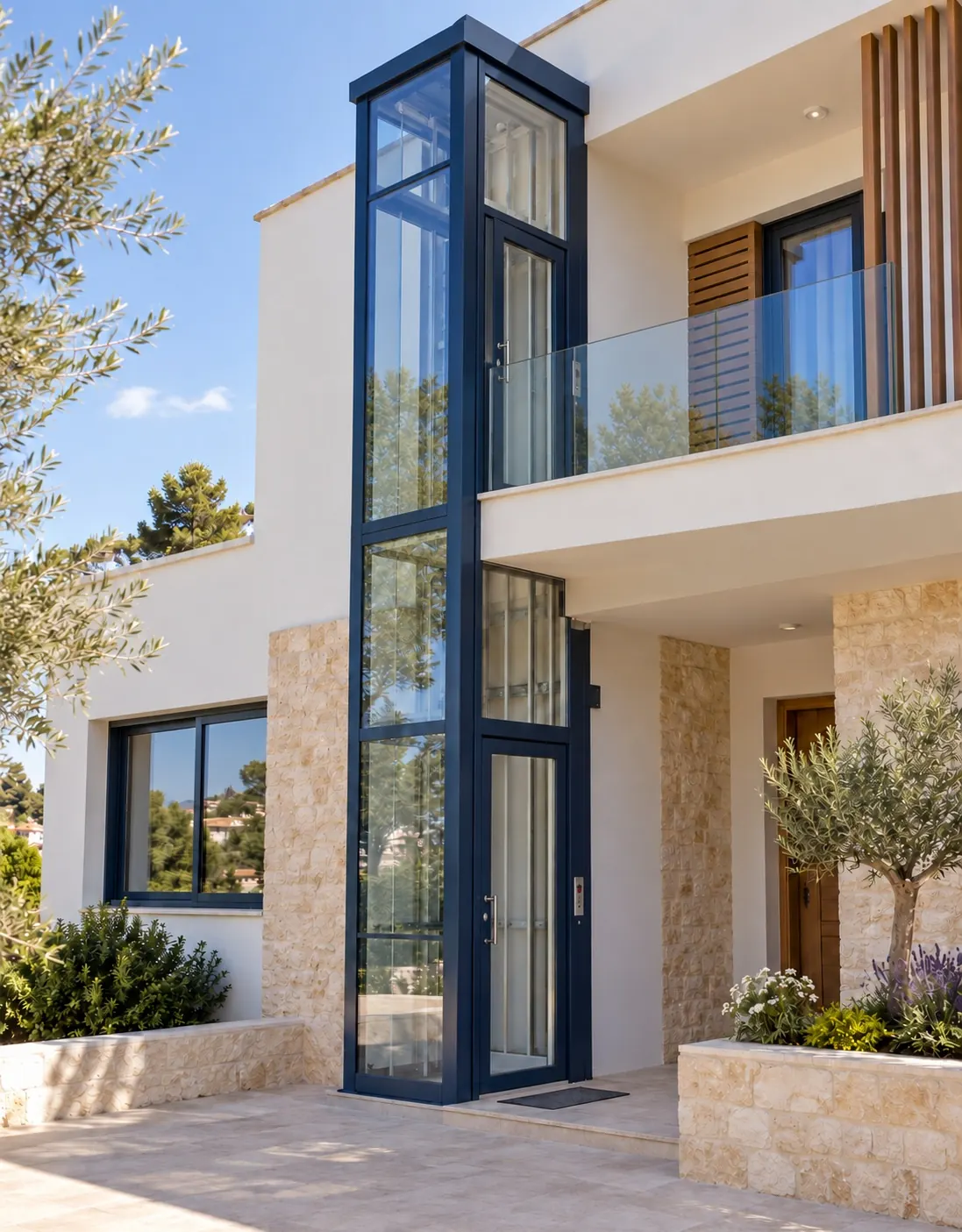
Accessibility in public spaces is not only a legal obligation: it is a business opportunity. An accessible hotel, shop or museum reaches more customers, improves its reputation and complies with regulations that are increasingly enforced. However, many owners and managers fear that adapting their building will involve costly and disruptive construction. The good news is that, in most cases, a platform lift solves the problem with minimal intervention.
Accessibility regulations in Spain
In Spain, accessibility in public-use spaces is governed by two main regulatory frameworks:
- General Law on the Rights of Persons with Disabilities and their Social Inclusion (consolidated text approved by Royal Decree-Law 1/2013, which integrates the LIONDAU and the amendments of Law 26/2011): establishes the obligation to guarantee universal accessibility in all environments, products and services for public use. Its general deadline for adapting existing environments has already expired, so the obligation is fully enforceable today.
- Technical Building Code, Basic Document on Safety of Use and Accessibility (CTE DB-SUA): defines the specific technical requirements for accessibility in buildings, including when accessible routes must be resolved with a lift or another compliant lifting device.
Non-compliance with these regulations can result in fines, discrimination claims and problems with operating licences and, more importantly, the exclusion of a significant percentage of the population who cannot access the building.
It is worth noting that not every lifting device is valid for every accessible route: the right solution depends on the level change to be overcome, the use of the building and the applicable regulations, and must always be confirmed through a technical study of the project.
Hotels and accommodation
In the hospitality sector, accessibility is a direct competitive factor. A guest with reduced mobility who cannot reach their room, the restaurant or the pool is a lost customer and a negative review. Platform lifts enable:
- Room access: overcoming level changes between reception and bedroom floors.
- Access to common areas: connecting the lobby with restaurants, function rooms or event spaces on different floors.
- Pool and outdoor access: eliminating level changes between the interior of the hotel and outdoor areas.
In low-rise hotels — the majority of establishments on the Costa del Sol and Andalusia — a platform lift can cover these needs without the building work and cost of a conventional lift.
Shops and supermarkets
Shops with steps at the entrance or with products spread across multiple floors lose customers every day. A platform lift enables:
- Overcoming entrance steps: an exterior platform lift attached to the façade removes the barrier with no interior work.
- Connecting floors in multi-level shops: allowing all customers to access the full range of the establishment.
- Facilitating small transports: certain models also allow goods or trolleys to be moved alongside the user, always within the equipment's rated load.
Museums and cultural centres
Museums and cultural centres face a particular challenge: many occupy historic buildings where major renovation is unfeasible or prohibited. The platform lift offers a solution for multi-floor access without structural renovation, respecting the building's architecture and allowing all visitors to enjoy the full exhibition.
Administrative and public buildings
Town halls, clinics, surgeries, offices and public buildings have an obligation to be accessible. In these buildings, the platform lift enables:
- Compliance with accessibility regulations without disproportionate investment.
- Serving all citizens on equal terms.
- Avoiding fines and legal problems arising from non-compliance.
Advantages of platform lifts in public spaces
The accessibility platform lift offers a series of advantages that make it the ideal solution for most public spaces:
- Fast installation: assembly of the equipment is usually completed in a few days, minimising disruption to the activity.
- Minimal building work: no enclosed shaft, deep pit or machine room is required, drastically reducing intervention in the building.
- Cost-effective compliance: it enables compliance with accessibility regulations at a fraction of the cost of a conventional lift.
- Design integration: current models offer finishes and options that integrate into the building's aesthetics, both indoors and on the façade.
Why AKROS?
At AKROS Movilidad we are not manufacturers: we are prescribers and installers. This means we do not sell you a single brand or model, but rather we study your space, analyse your needs and prescribe the equipment that best suits your project, from the best manufacturers on the market.
Our service is comprehensive:
- Prescription and selection: we choose the right equipment for your space and needs.
- Supply and installation: we handle the entire process, from supply through to installation and commissioning.
- Maintenance: we look after the equipment throughout its service life, with a responsive and approachable technical service.
For a hotel, shop or public building, this means a single point of contact responsible for the entire solution, from the initial study to long-term maintenance.
Accessibility is not an expense: it is an investment in customers, reputation and regulatory compliance. And in most public spaces, a platform lift is the most cost-effective way to achieve it.
Conclusion
Accessibility in public spaces is a legal obligation and a business opportunity. Platform lifts enable compliance with regulations and the removal of architectural barriers with minimal investment and intervention, without compromising on design or quality. At AKROS Movilidad we study each project and prescribe the most suitable equipment, install it and maintain it, so that your space is accessible to everyone.
Shall we study your project?
Our technical team analyses your space and prescribes the equipment that best suits your needs, with no obligation.
Request free advice